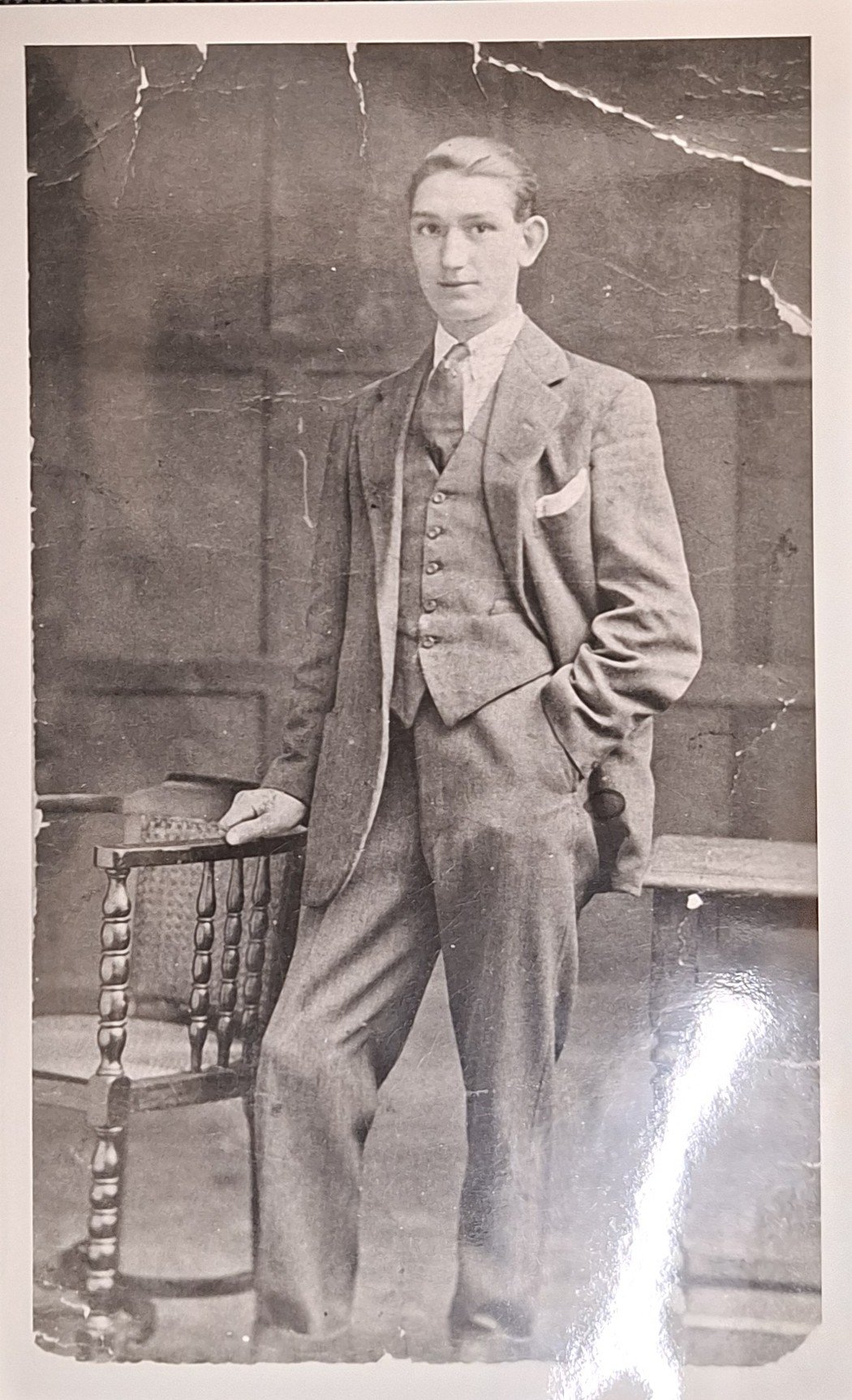
A gift to the State
We were privileged to interview Carmel about her father’s War of Independence medal and documents
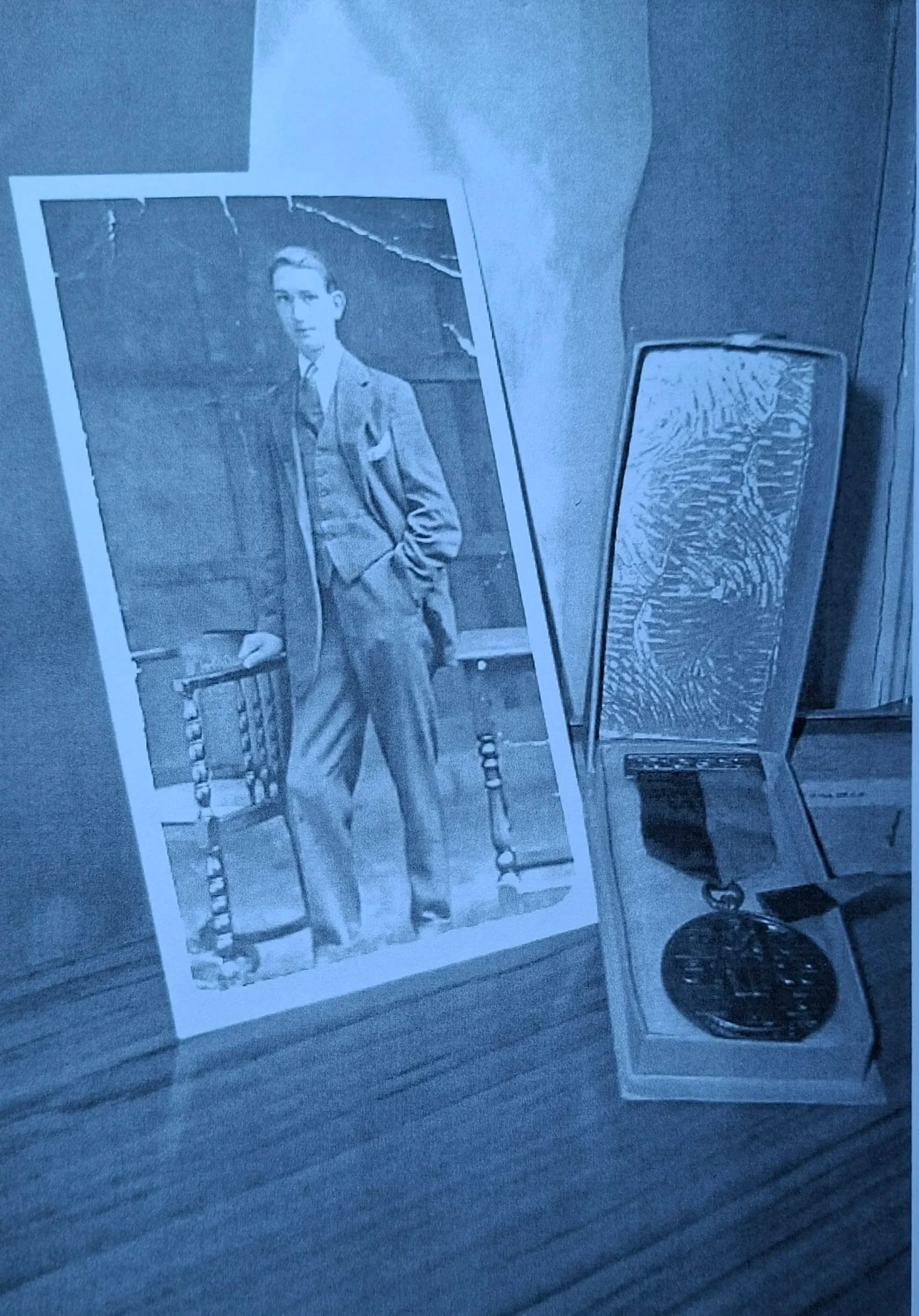
John Bowden joined the Volunteers in 1917
This is the story of the medal he never got to see…
John Bowden was born in Dublin in 1898. At that time, Dublin was the poorest city in Europe and Ireland was under British rule. John lived with his parents in New Street, Dublin. Life was hard for the family as John’s dad was an alcoholic. Carmel’s mum, Amelia, grew up with John and recalled that she saw him out playing in his bare feet, with his mum unable to afford shoes. Both of them knew they would always end up together and they married in 1923. John was working as a Bootmaker.
Amelia’s mum, who Carmel referred to as Granny Clancy was a member of Cumann na mBan. This was a female revolutionary group, dedicated to winning Ireland’s independence from British colonial rule. Granny Clancy was a friend of another revolutionary, Eamon De Valera, who later became Taoiseach and President of the Republic of Ireland. John was influenced his his Mother in Law, whom he adored, and a year after the Easter Uprising, he joined the Volunteers in 1917.
After the Easter Uprising, the British deployed both the Auxiliaries and The Black & Tans to Ireland. These were paramilitary police with a mission to ensure that there were no further uprisings. However, they were poorly trained, brutal and lacked discipline, carrying out arbitrary reprisals against civilians, burning homes and farms. John Bowden was deployed by the IRA to patrol the Dublin streets, patrolling from Donnybrook to Stephen’s Green and ensuring the safety of civilians, especially women. He was armed and if he had been arrested, he would have been shot. He joined the First Aid Unit E Company, 3rd Battalion , tending to injured rebels, which, if found out would have led to his arrest.
Carmel recalled that John still went on manoeuvres
“I can remember when I was growing up, he was still with the volunteers and every Sunday after mass we’d all clean his buttons and he had little cross rifles on his collar and he’d polish them. Sean, my brother, would polish his shoes and we all got Daddy ready to go. And he used to go off every Sunday to Arbour Hill to manoeuvre”
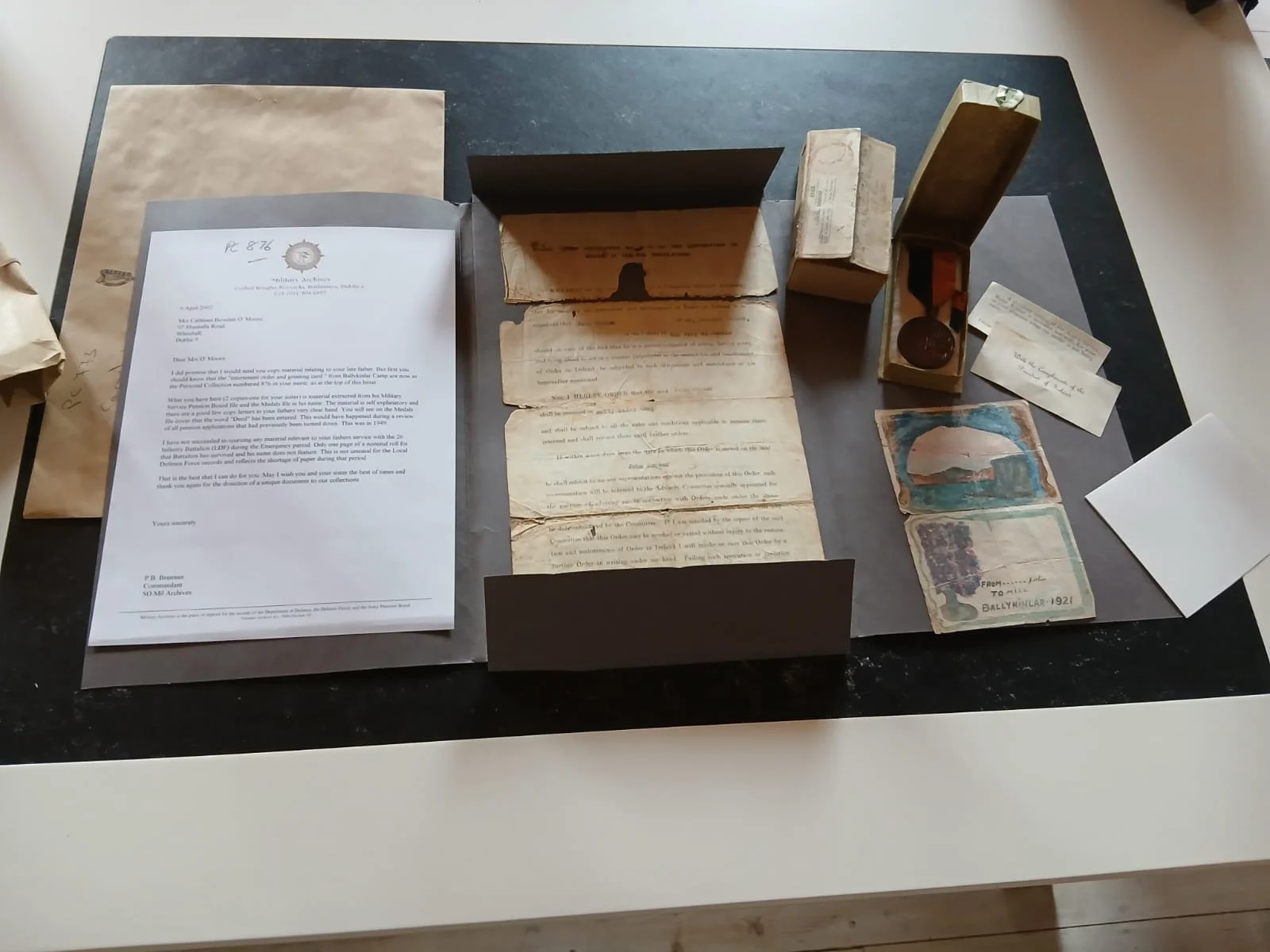
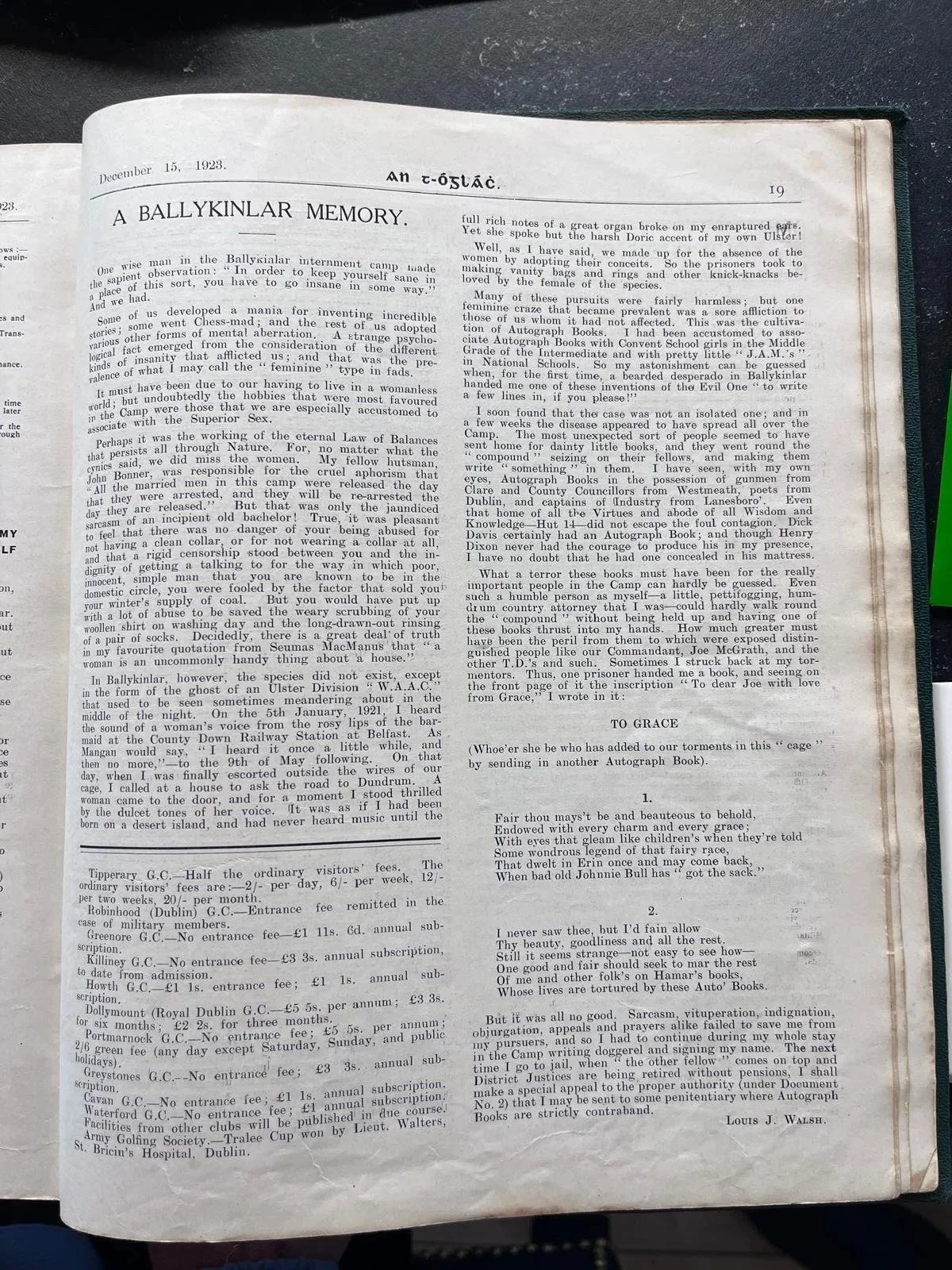
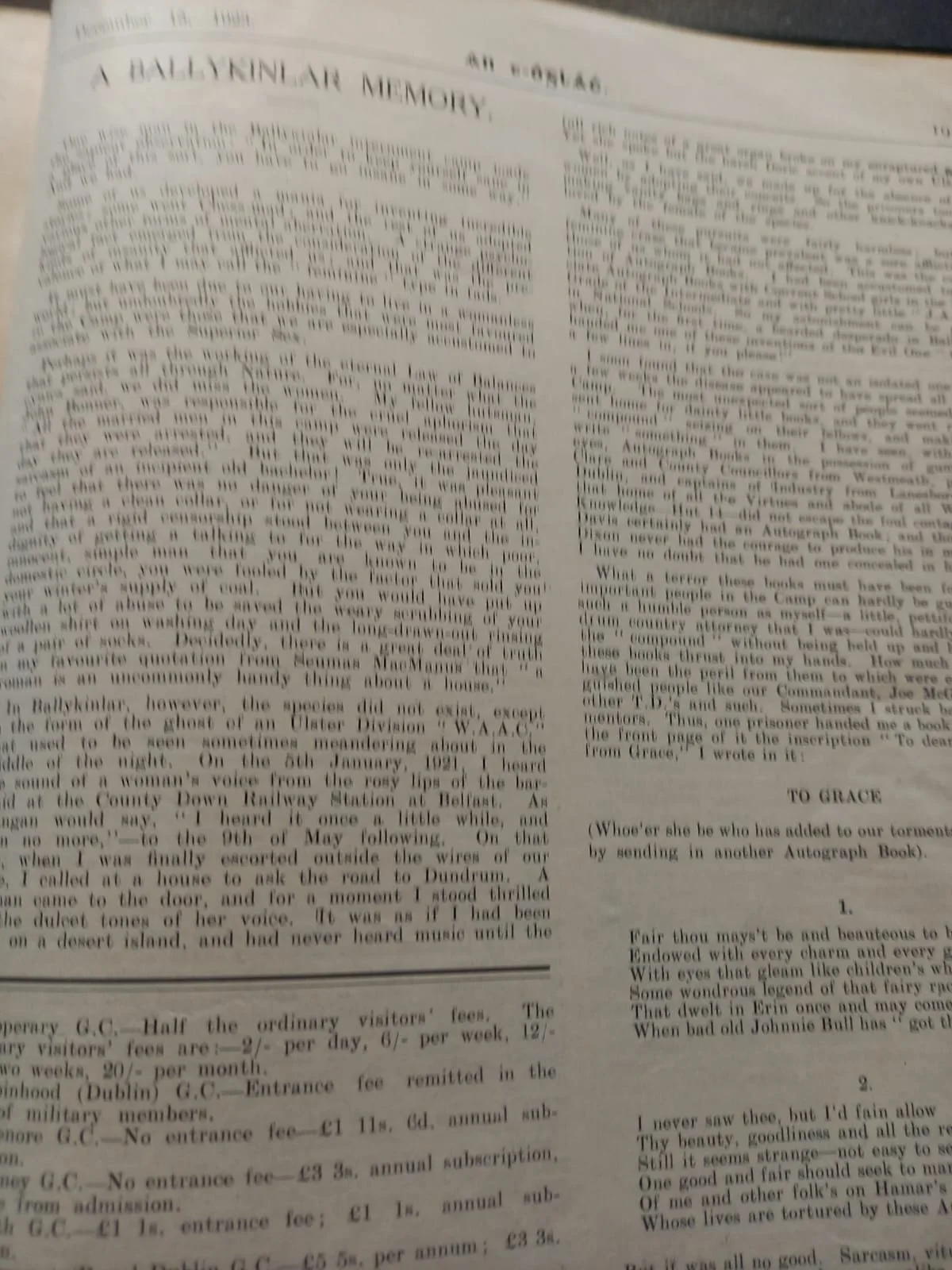
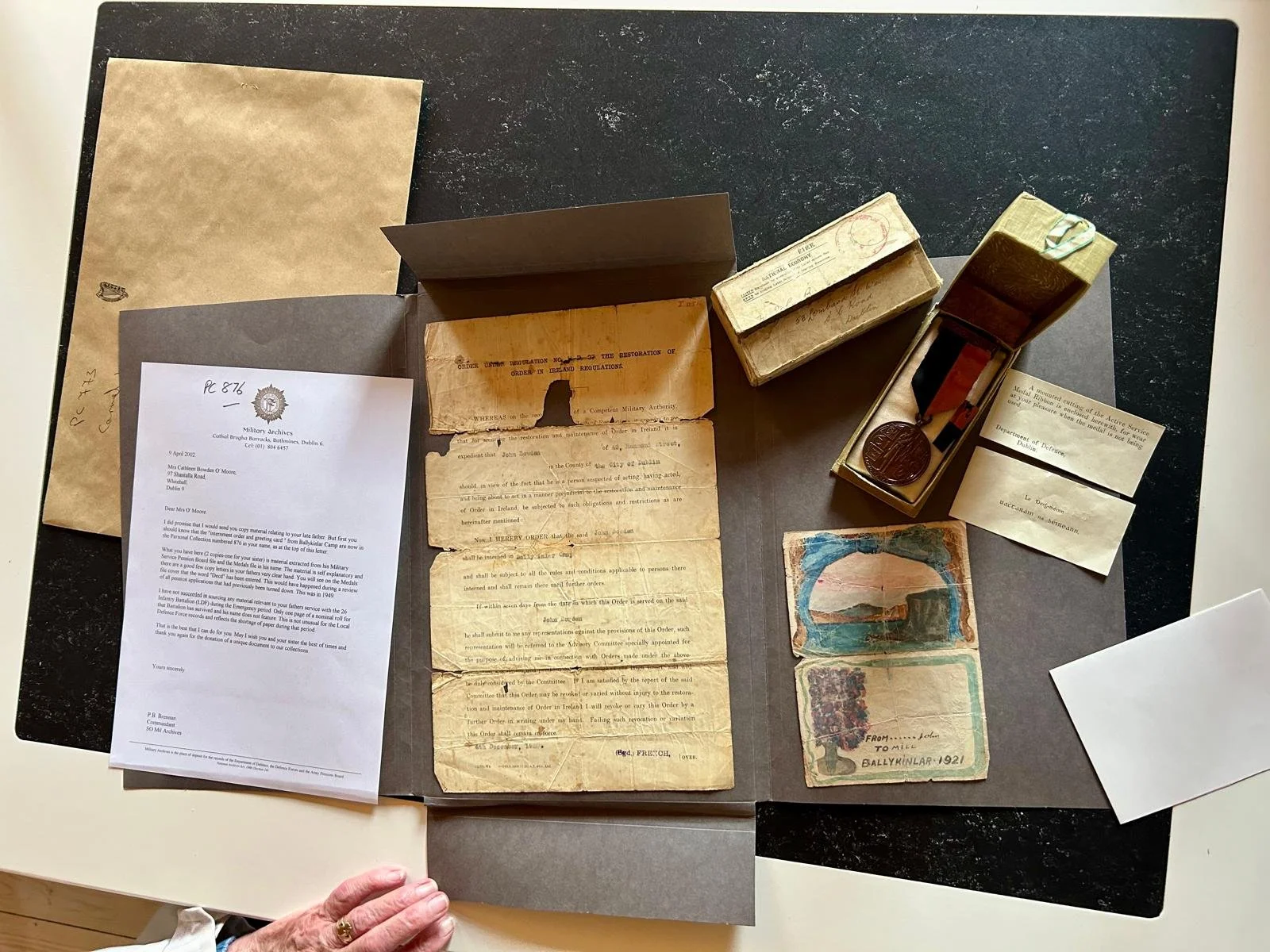
The Police found a list of those attending the First Aid Class and in November 1920, John was presented with a letter under the ‘Restoration of Ireland Act’ to present himself to the British authorities to be arrested and failure to do so would mean he would be shot on sight. John turned himself in and he was taken to Ballykinlar Internment Camp in Derry. He had not been tried or found guilty of any crime.
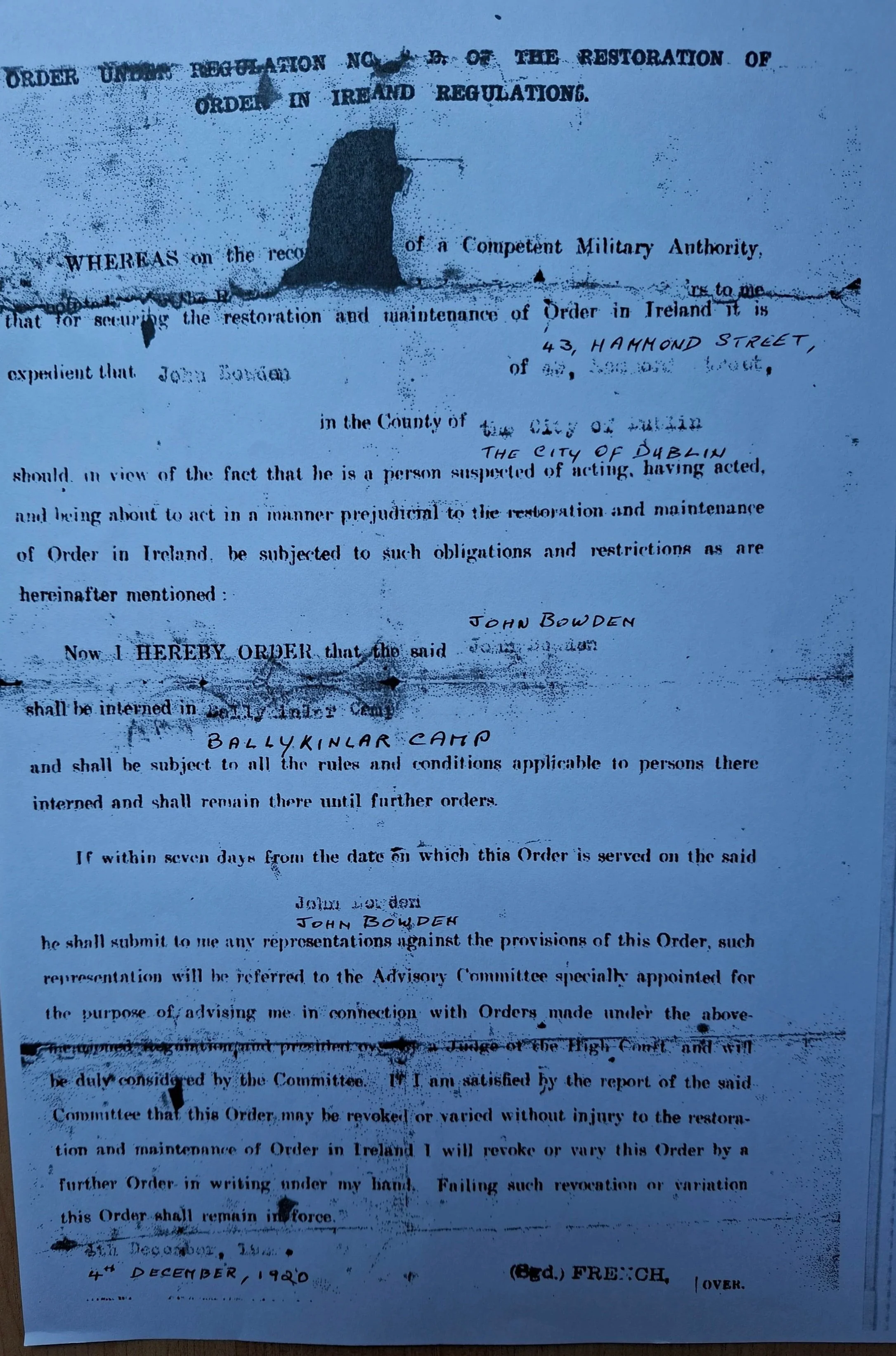
Arrest Warrant
The tale of finding the arrest warrant is worth a story in itself! Carmel’s sister, Kay knew that their brother Sean had the document as a memento. But, Sean lived in New York. Fortunately, Kay’s husband worked for an airline and Kay was allowed free air travel. So she hopped on the plane to New York and came back with the arrest warrant.
Now back to the story of John Bowden!
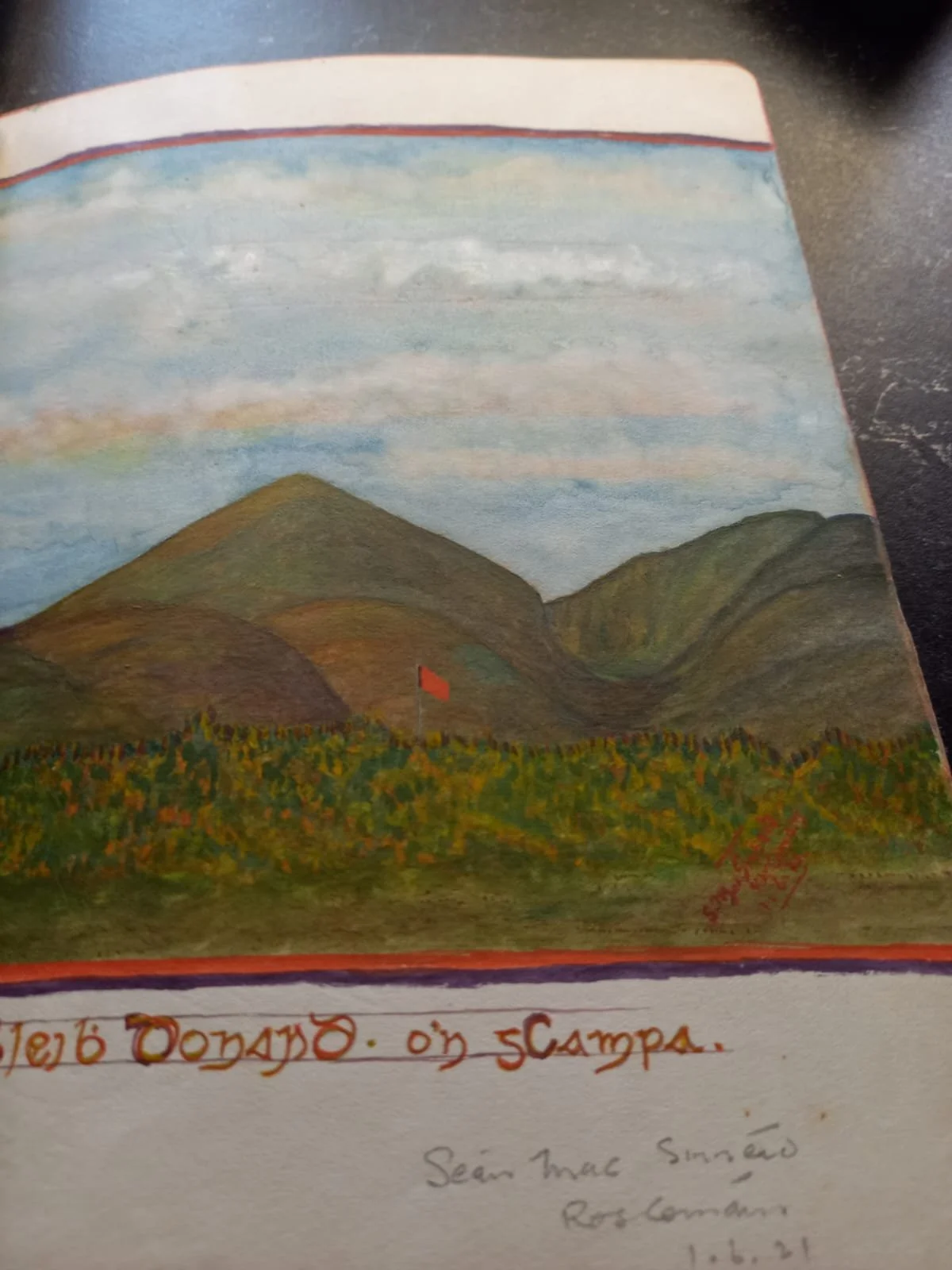
Arriving at Ballykinlar, John was a prisoner but he didn’t know how long he would be held captive. Many of the men held there were incredibly artistic. They had little to do with their time and they turned to art to document their time there and stay in touch with their anxious loved ones at home.
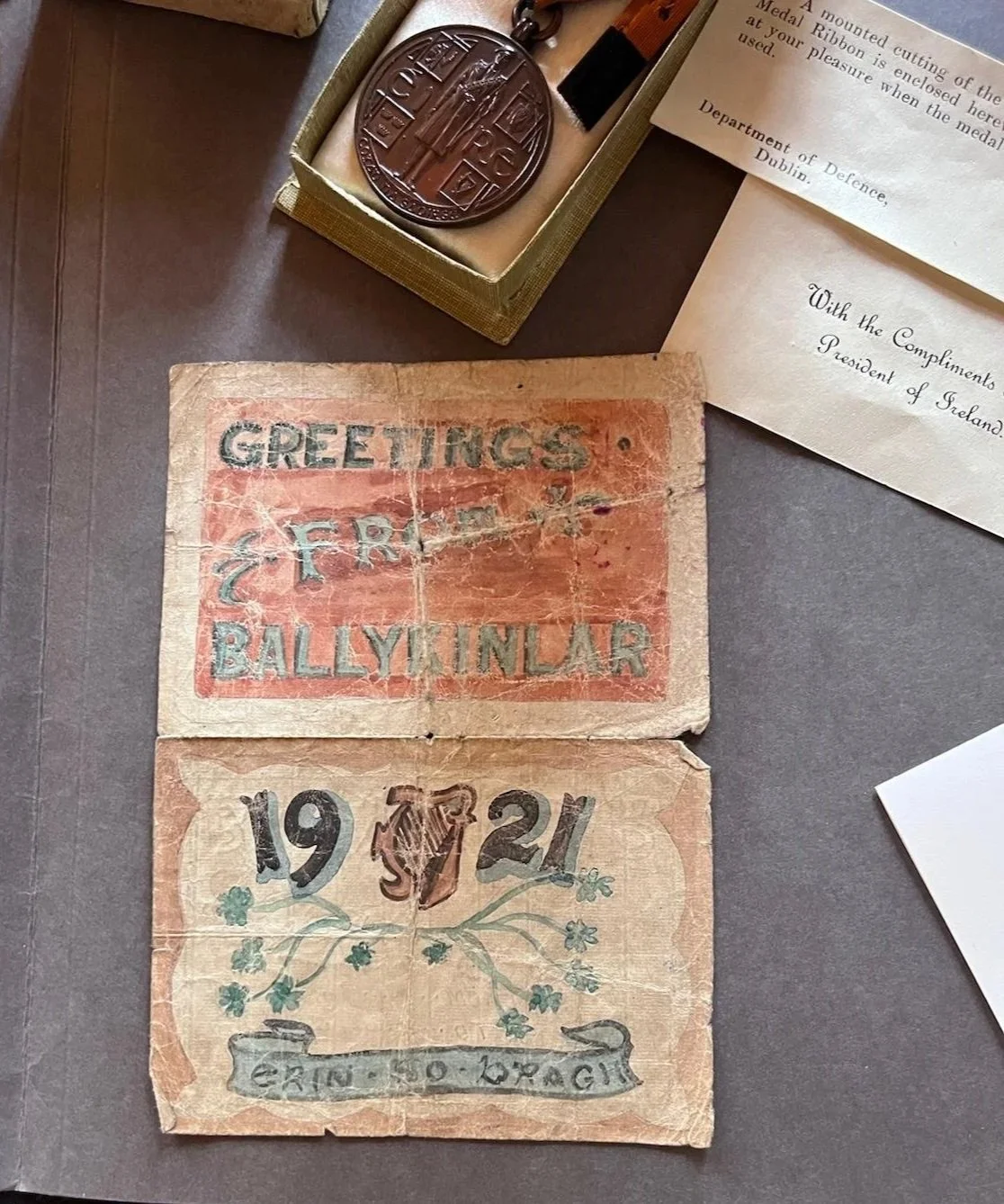
John sent this beautiful card to Amelia…Mill
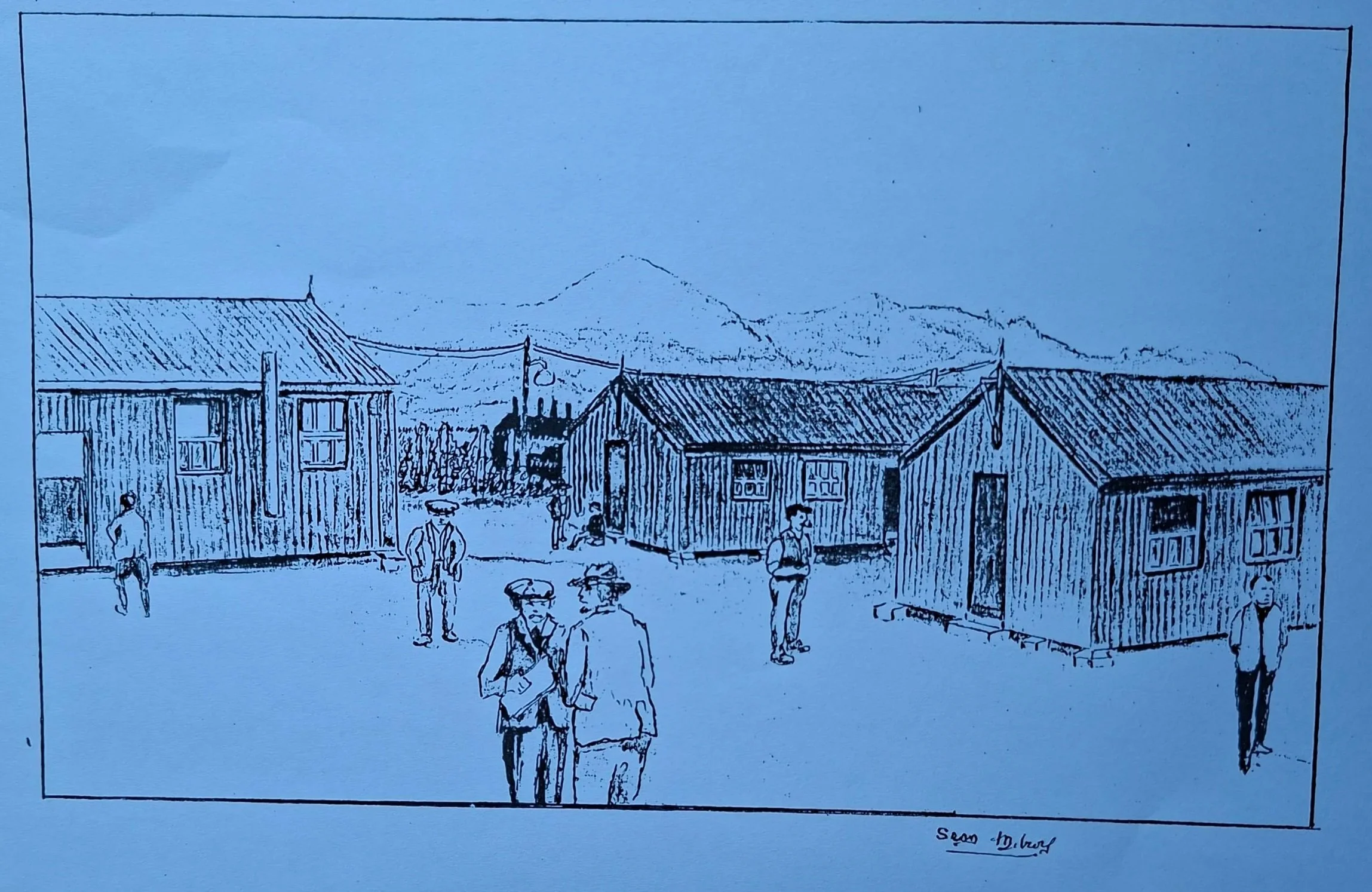
“I could hear my daddy's words describing the huts because the picture that is in here somewhere was exactly what daddy had described to me. The huts and they were up on bricks and there was gaps underneath and all the rest of it.”
Carmel
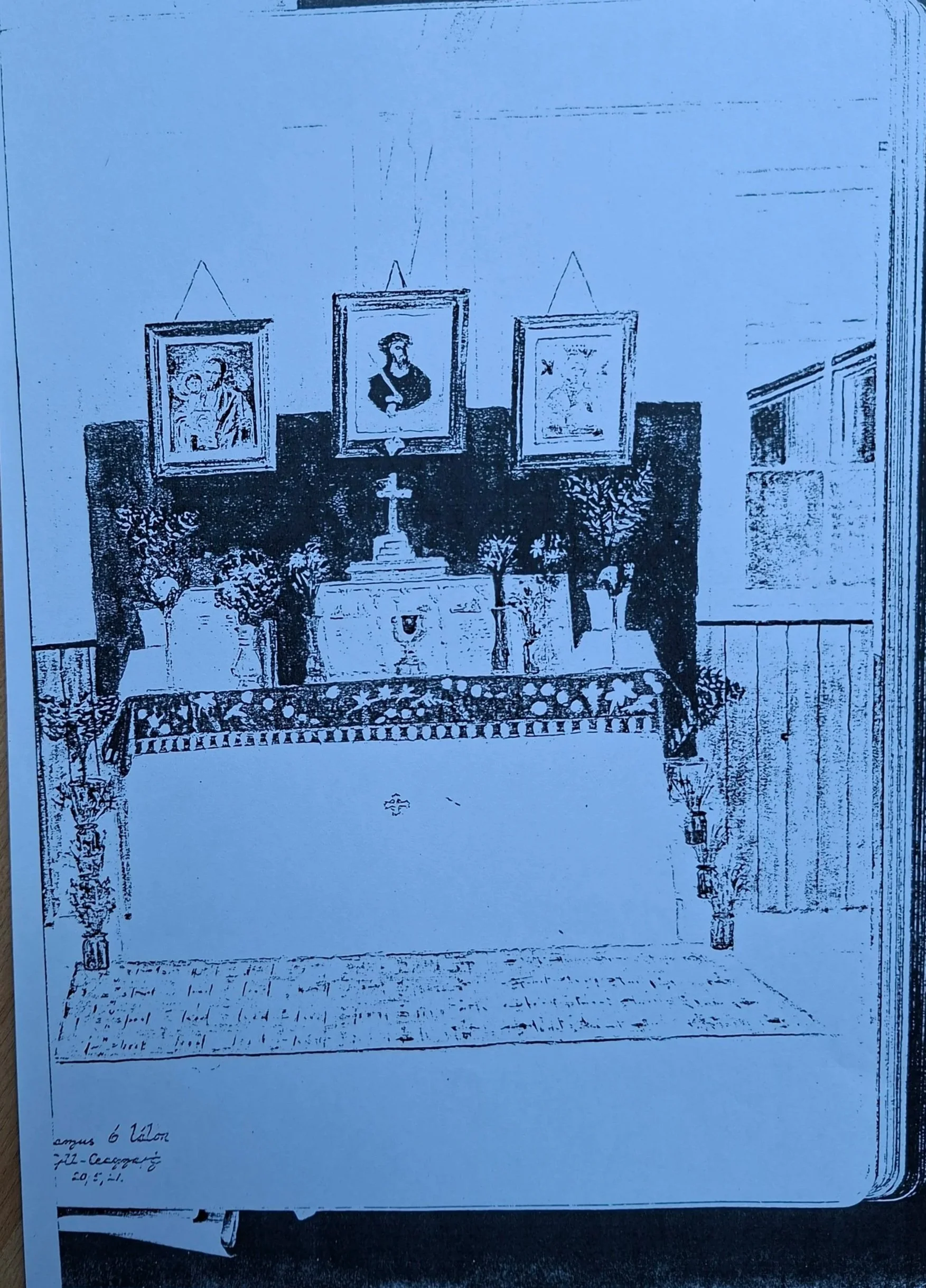
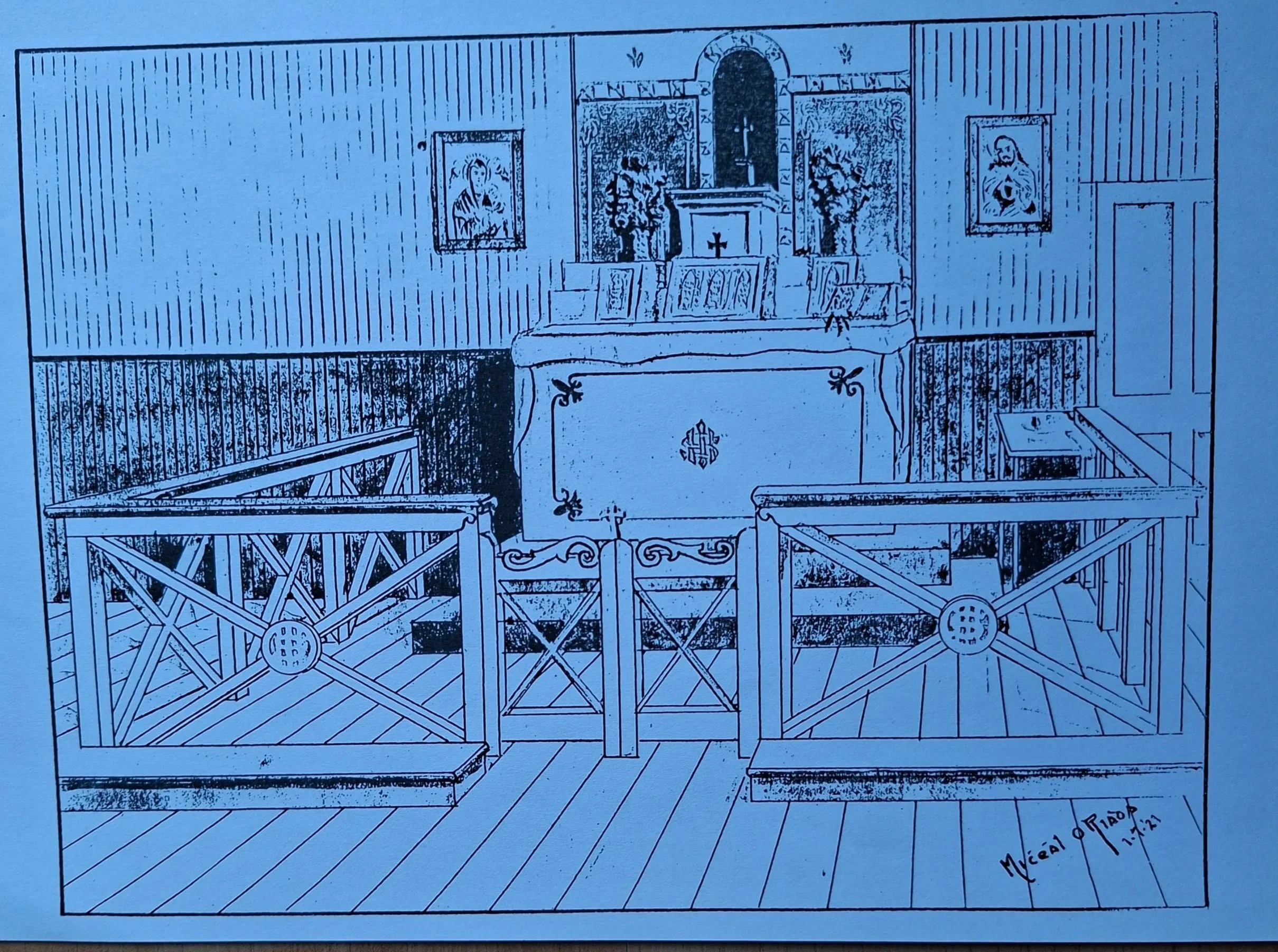
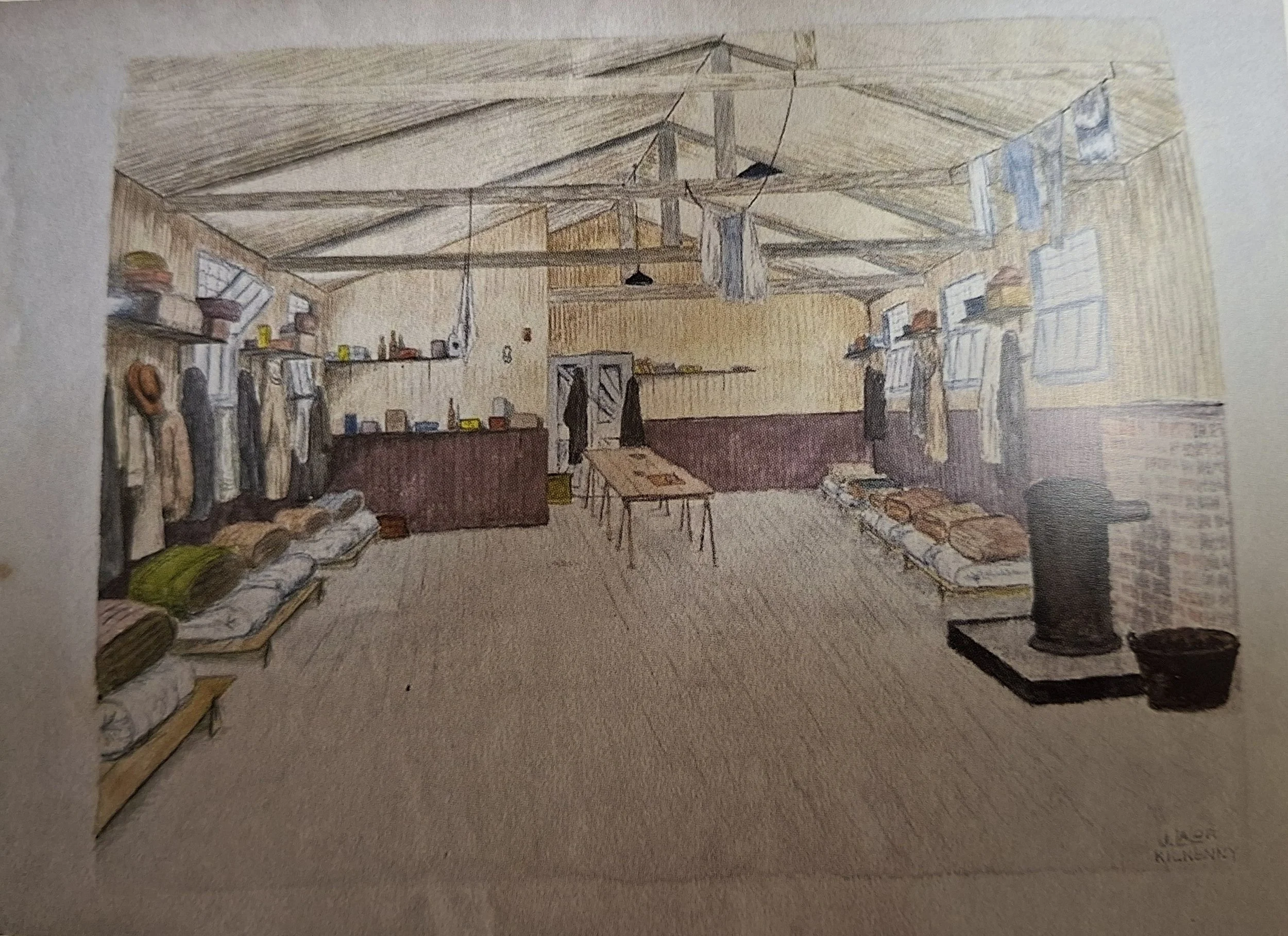
If you are interested in seeing more photos from the Ballykinlar collection please follow link to this external site https://sites.rootsweb.com/~irluie2/Ballykinlar/index.htm
“It’s very important that people do things like that and capture things where they wouldn't have been let have a camera. No, no, no!” Carmel
After the Treaty was signed in 1921, John was released. He came home and in 1923, he married Mill.
From 1934, former Volunteers were entitled to a military pension from the new Irish State. John applied. Despite references, including one from his former Captain,
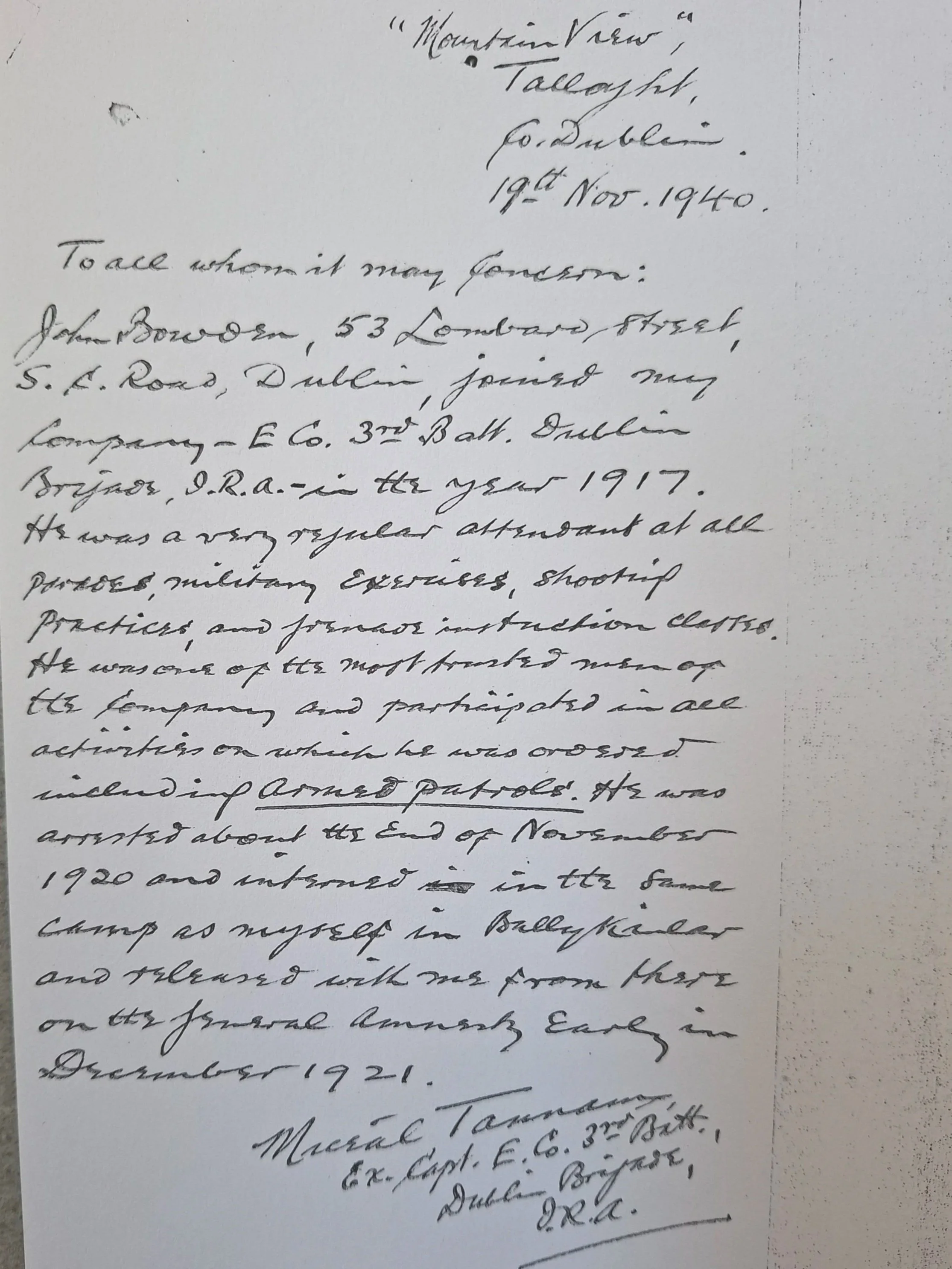
“He was a very regular attendant at all parades, military exercises, shooting practices and First Aid instruction classes.
He was one of the most trusted men of the company and participated in all activities on which he was ordered, including Armed Patrols. “
Micheal Tannam Ex Captain E Co. 3rd Batt. Dublin Brigade.
John was turned down. However, he remained loyal to the memory of his service with the Dublin Brigade and Carmel recalled,
“I must have been about 6 or 7 at the time and it was Easter and there was a parade through Dublin and we all went down and we were standing near the GPO and we just heard the men’s feet walking and Mummy said here they come, here they come and we’re all looking and I’ll probably cry when I tell you this memory and all the soldiers all the fellas all came and were all upright with the gun in their hands and they were marching and of course when they all came to cross we all said Daddy, Daddy and he didn’t look.
He just smiled and kept walking. Amazing. We were all going Daddy, Daddy and I can still see him walking past with a smile on his face but never looked up.
”
Based on Carmel’s memory of seeing her father and the fact that she knows this was at Easter, we are pretty certain that what Carmel saw was the 25th anniversary of The Easter Rising parade. This short video from Pathe News shows the commemoration. An amazing memory of a memorable day.
Carmel’s happy childhood was shattered in 1946 when her mother died suddenly of an aneurysm in her brain. Only 10 months later, in January 1947, Carmel’s father was taken into Harrold’s Cross Hospital, Dublin and tragically died of a heart attack. He was only 48. Carmel said that he never recovered from his wife’s death. He died of a broken heart.
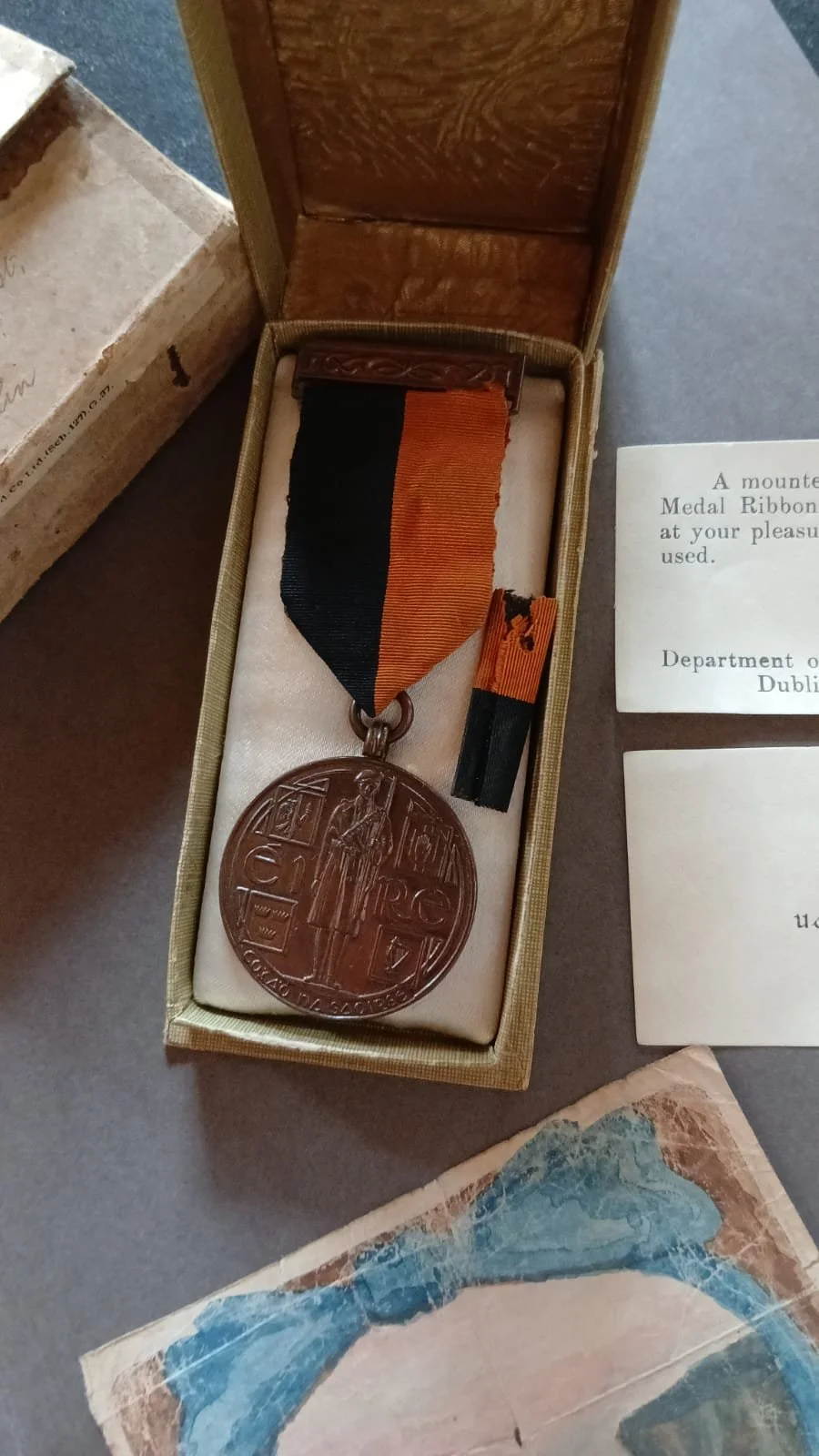
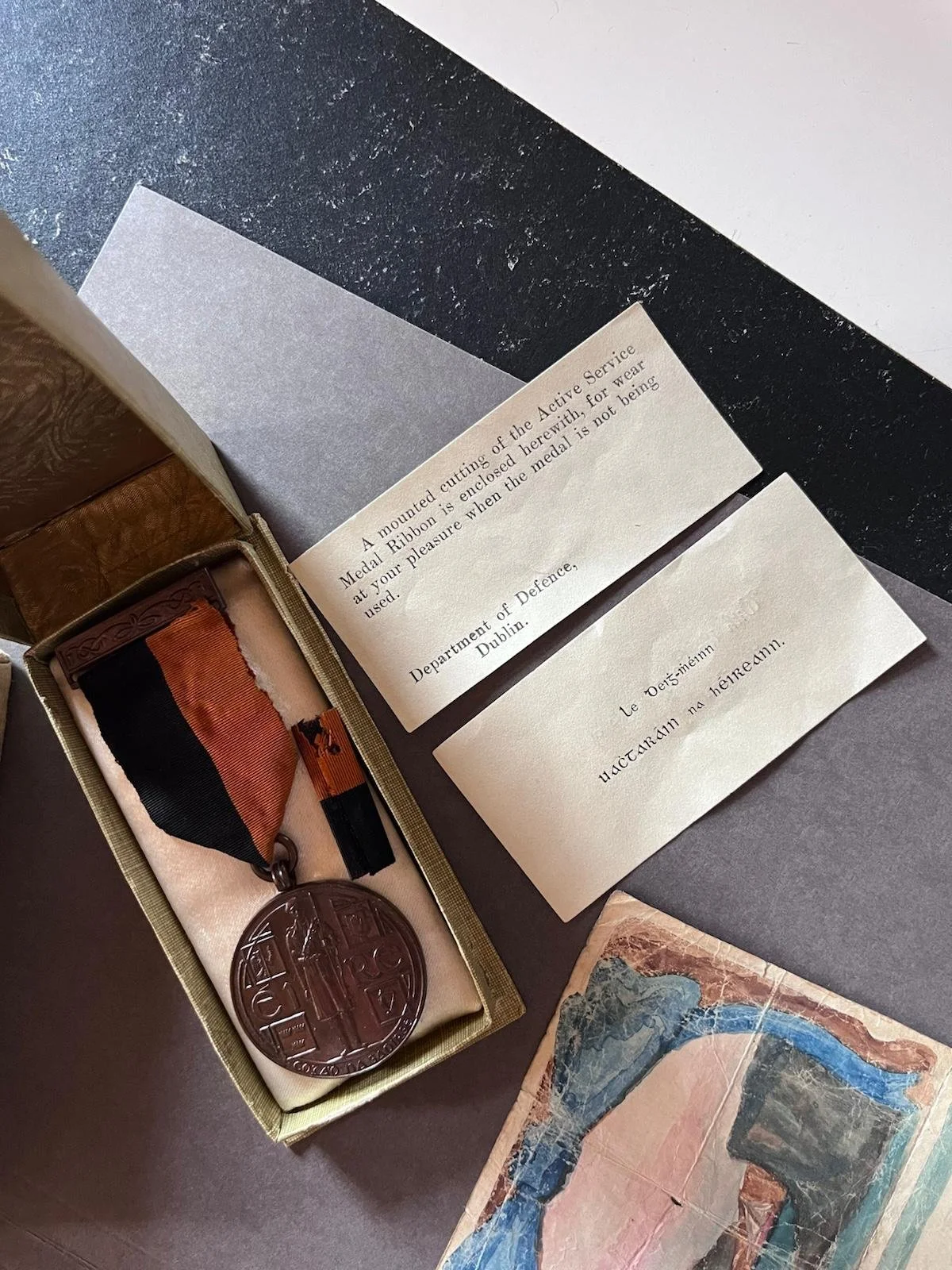
In July 1947, John Bowden was awarded his medal.
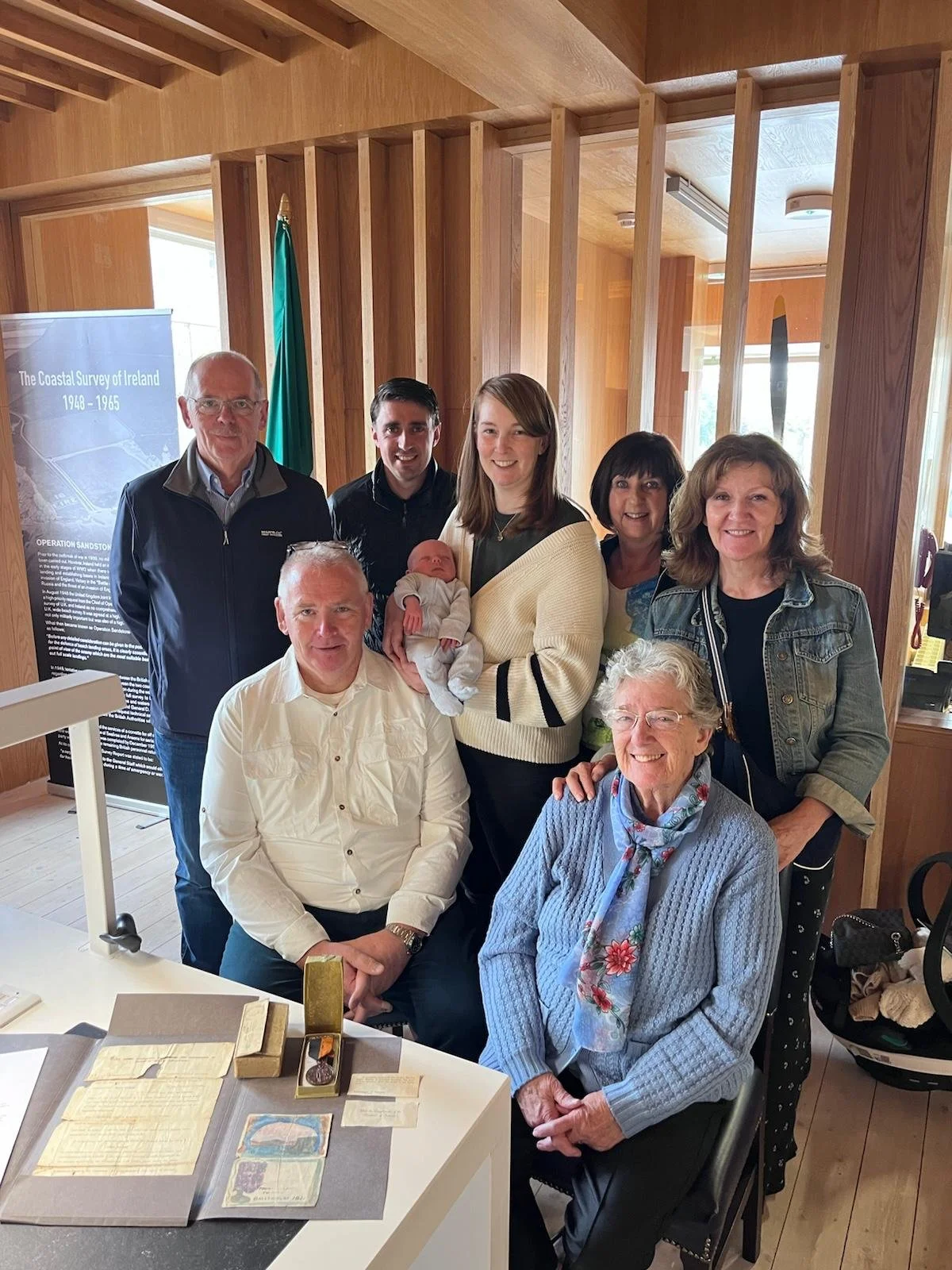
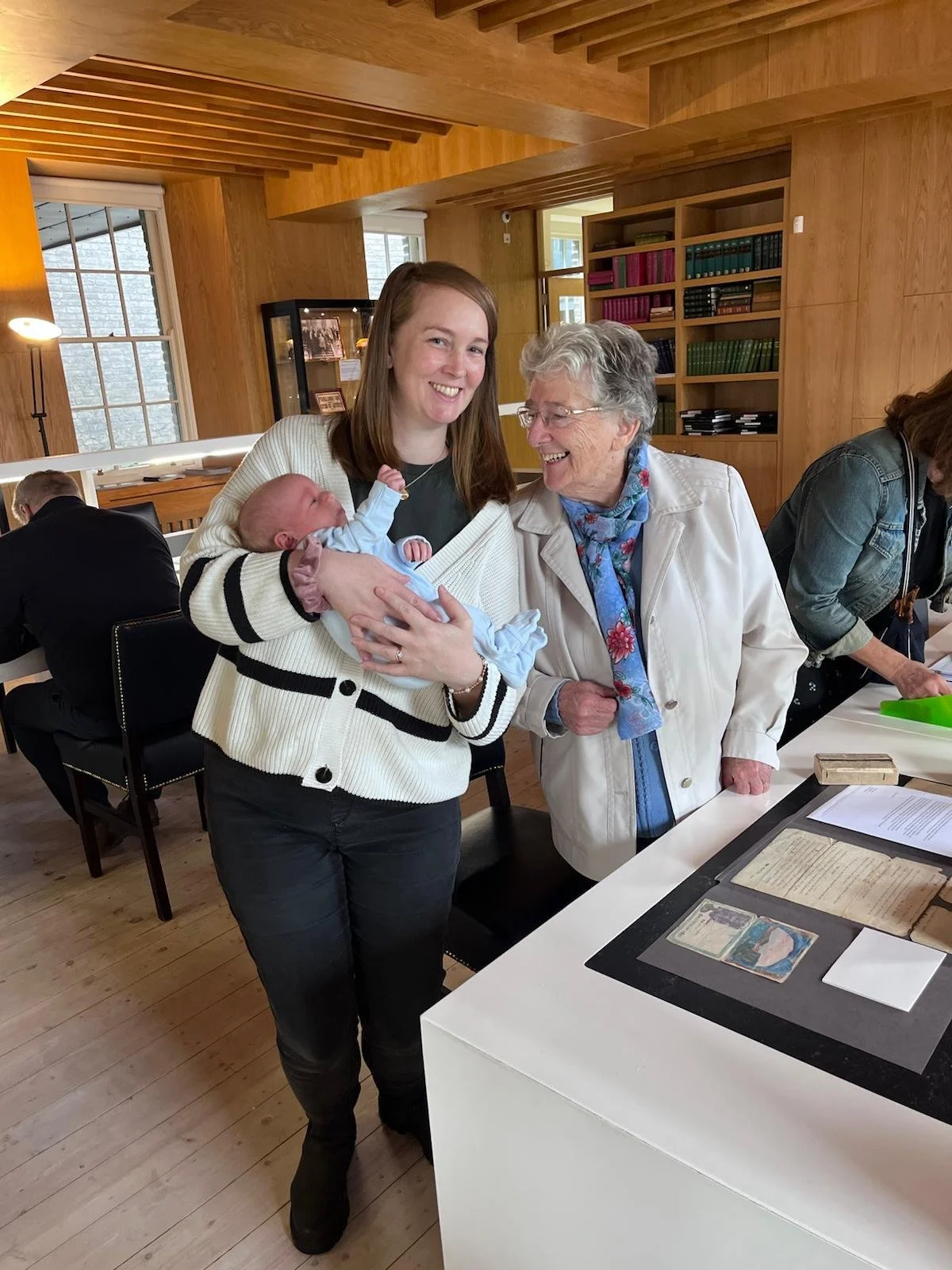
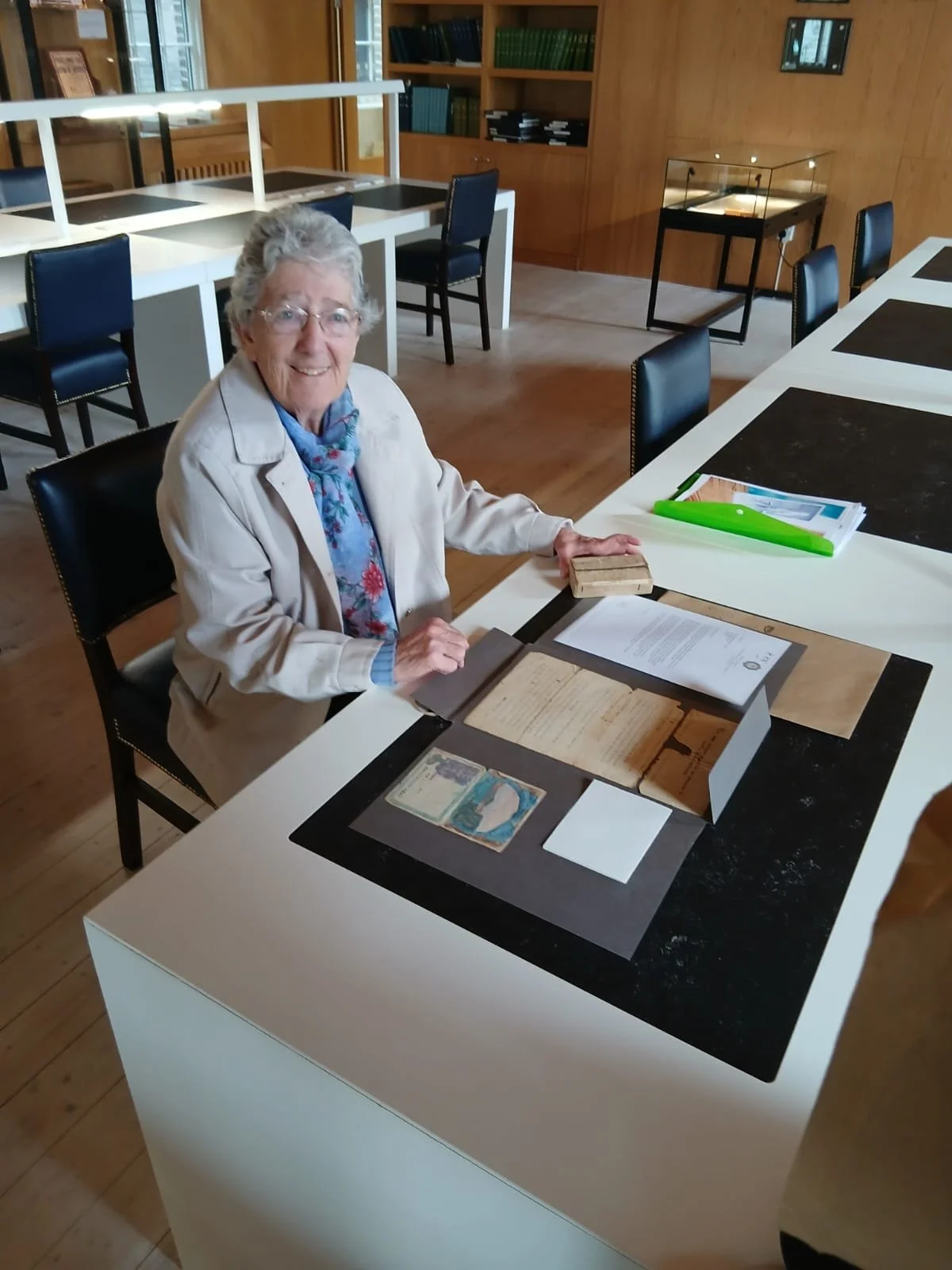
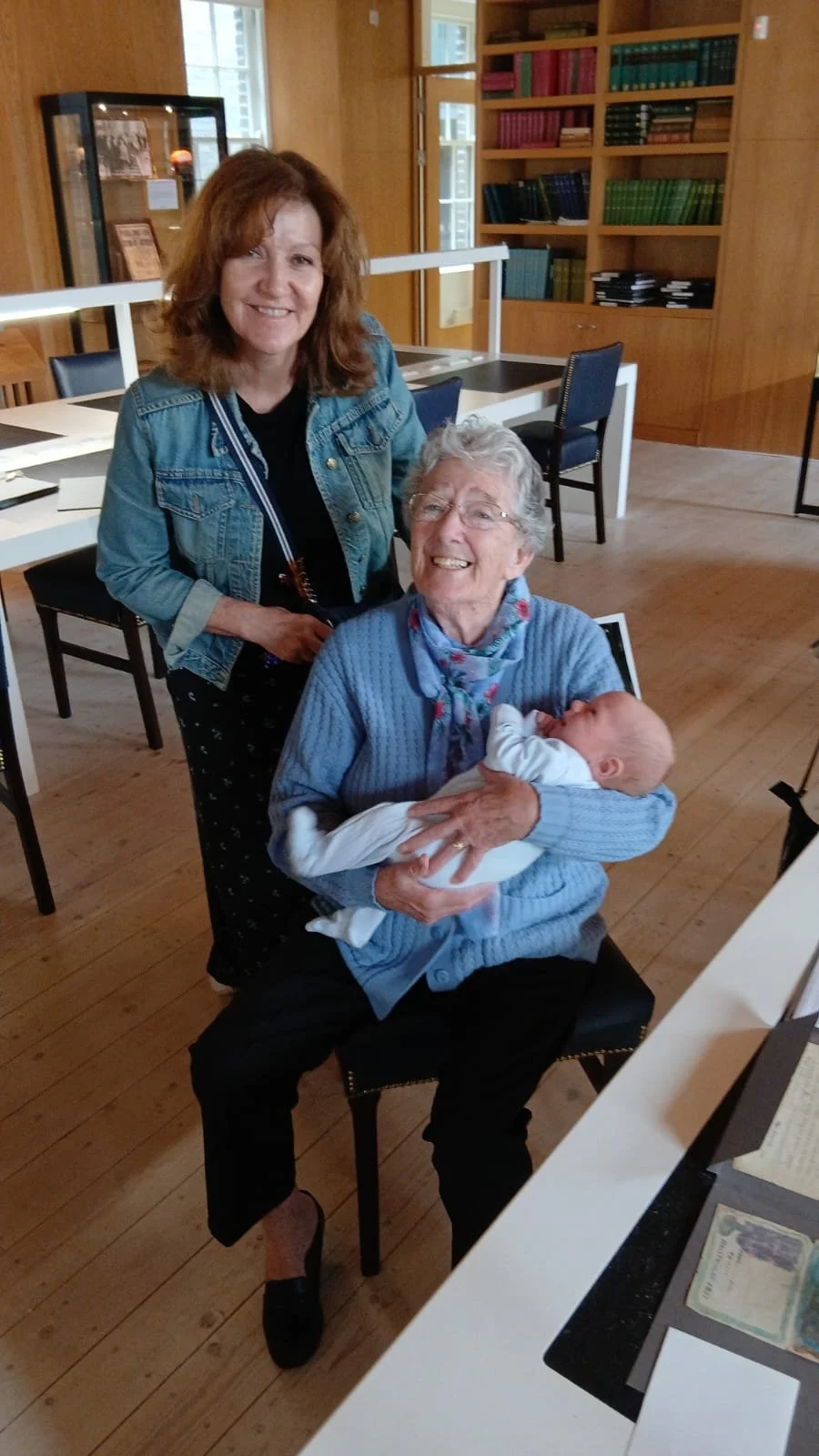
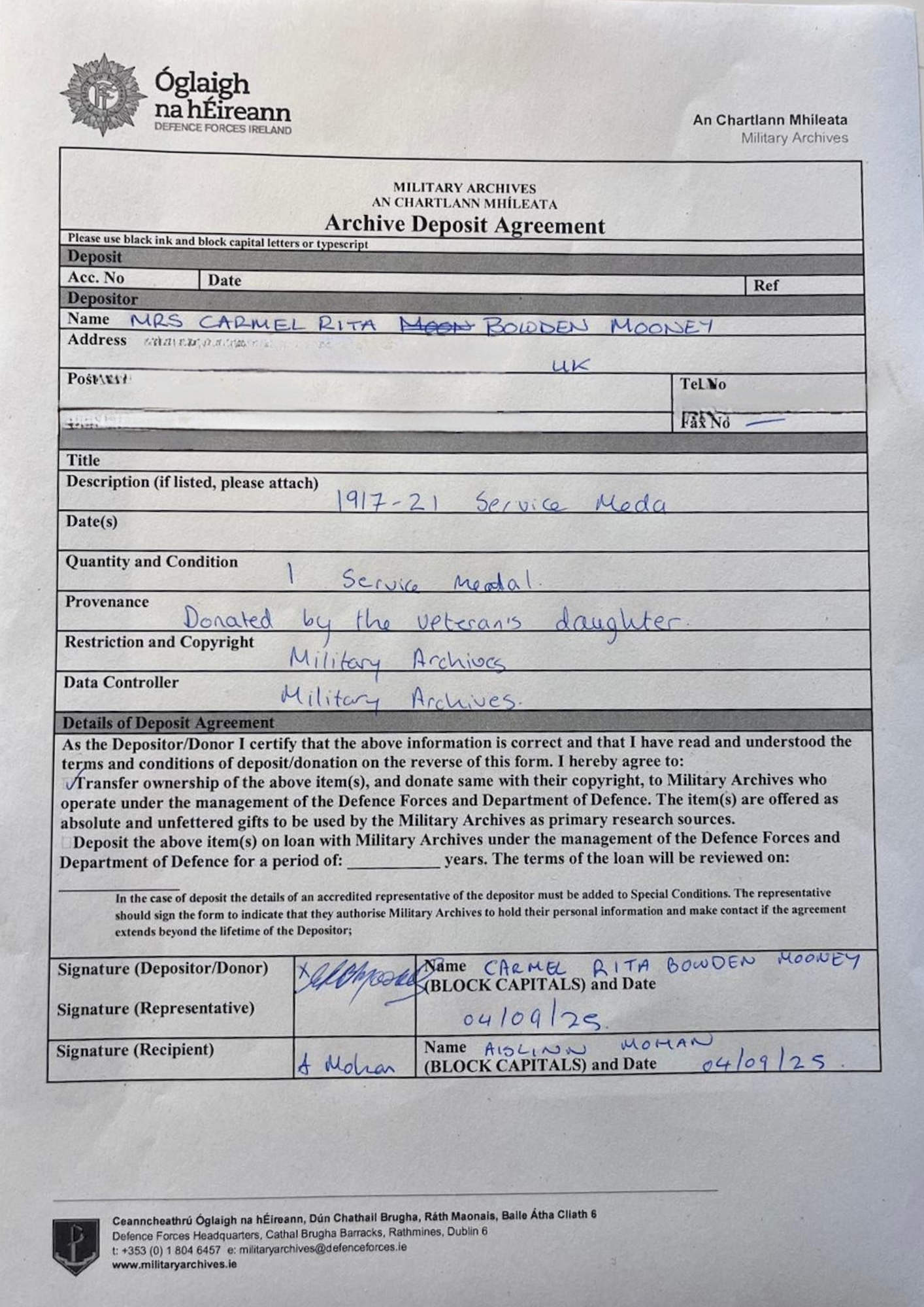
in 2025, Carmel decided that to donate the precious medal and his father’s papers to the Military Archives at Cathal Brugha Barracks, Dublin. The archivists were delighted as they had never seen the internment document before or the beautiful greeting card.
Carmel set off with her family to present the medal and papers, getting together across the generations, including a very new addition to the family.
We are very grateful to Carmel for sharing her father’s artefacts with us and for telling us his story.